Senior Thesis: "FW24 - SS25: Collection 01"
May 2025
Pitzer College, Claremont CA
My work looks at the intersections of materiality, the body, and sustainability. This project critiques mass consumption, reimagining “fast fashion” as a cyclical process in which discarded clothing does not clog landfills but instead decomposes organically and returns to the earth. In a world oversaturated with waste, I propose an alternative: garments born from constraint, where materials dictate form rather than the other way around. My process is a direct response to the excesses of the fashion industry, emphasizing slow craftsmanship and offering small-scale solutions for reducing plastic waste while balancing aesthetics, social and environmental responsibility, and innovation. On display is a small clothing collection that reflects a year of material experimentation. As companies turn to synthetics like polyvinyl chloride and polyurethane as cruelty-free leather alternatives, these materials remain environmentally harmful and lack the durability of real leather. In response, I explored a variety of biodegradable leather materials such as Kombucha SCOBY, mushroom mycelium, bio-plastic, natural rubber latex, and a discarded goat hide. This hands-on process was a journey of discovery, failure, and success, as I navigated the challenges of both creating materials and constructing garments from them. By working with unconventional, biodegradable materials, I consider the tension between ephemerality and permanence, and what it means for clothing to endure in a future where the earth can no longer sustain the burden of our waste. Rejecting synthetic materials, I give my interpretation of fashion rewilding with clothing that can be easily re-integrated with nature’s cycles. My piece embodies my post-apocalyptic response to the climate crisis. The aesthetic is not just a stylistic choice but also a conceptual framework of how fashion’s future may look, as we move closer to a world in which garments may need to be assembled from what is available. If fashion continues on its current trajectory as a major contributor to environmental degradation, scarcity will no longer be a choice but a reality. Yet, constraints can serve as a generative force and push designers to rethink material uses. Accepting natural processes of decay, I see sustainability not as a limitation, but as a creative and ethical imperative.

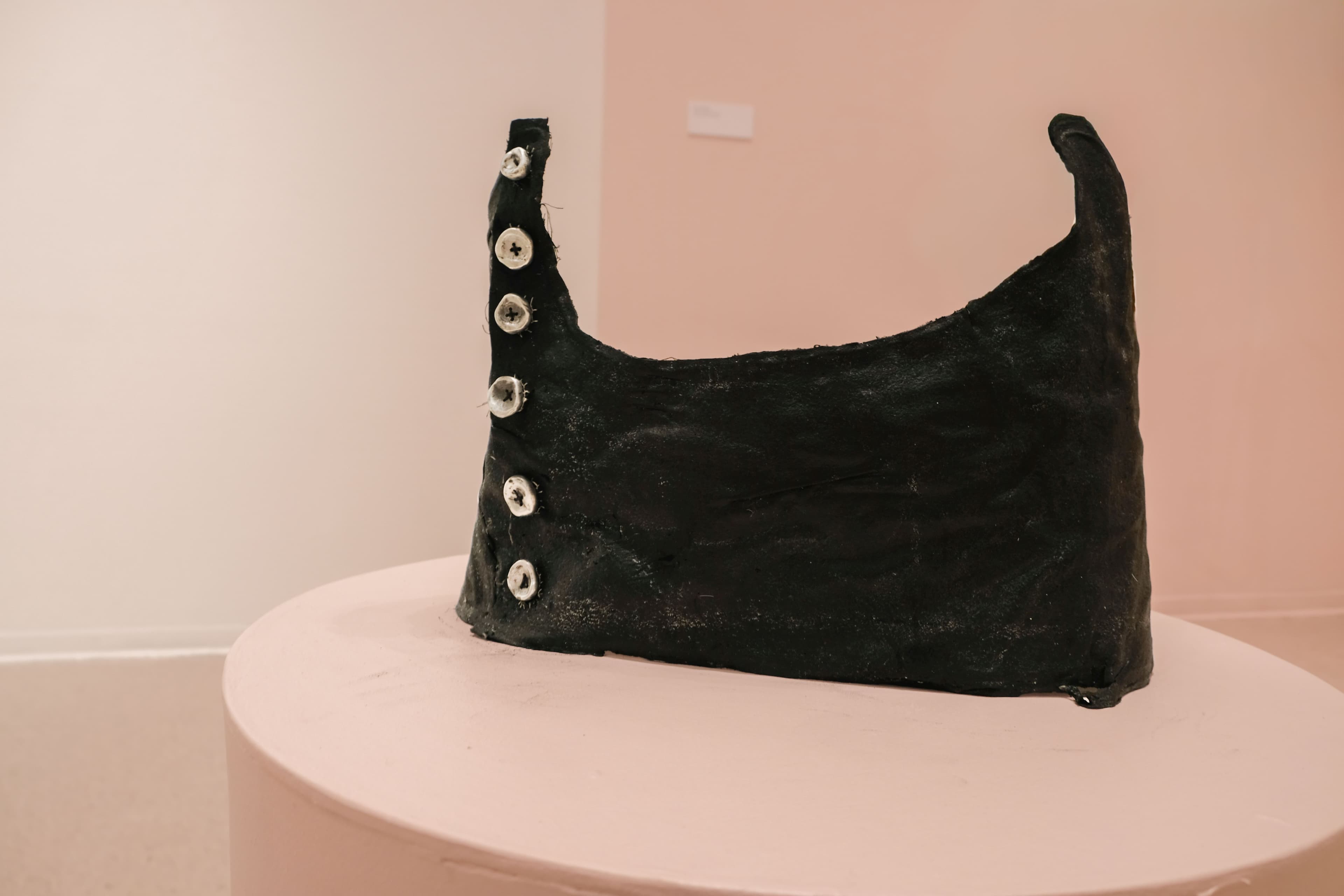
Kombucha leather corset with cast aluminum buttons


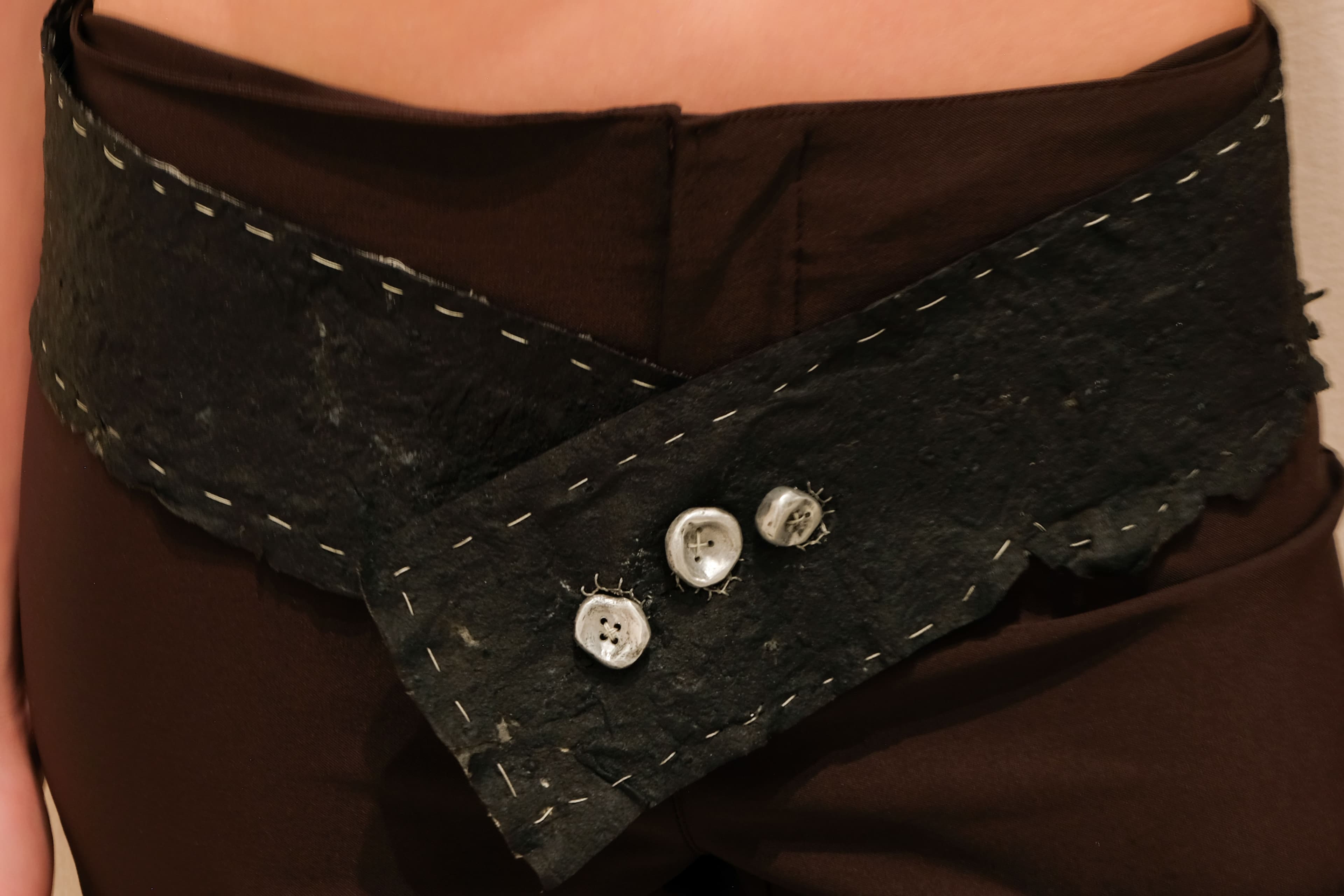








Display in Nichols Gallery